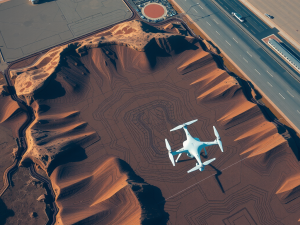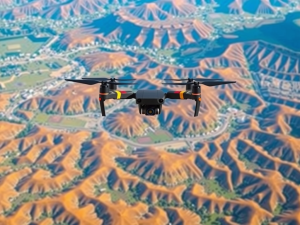

Technological advancements in aerial methods are transforming various sectors, enhancing precision in data collection and analysis. Recent innovations empower unmanned aerial vehicles to efficiently capture high-resolution imagery, fundamentally changing traditional mapping practices.
For instance, the incorporation of Lidar technology enables the creation of intricate topographic maps with previously unattainable detail, significantly reducing the time and labor involved compared to conventional techniques.
This evolution not only lowers operational costs but also improves accessibility to challenging locations, facilitating comprehensive data gathering for environmental research and resource management.
The integration of these tools with Geographic Information Systems (GIS) enhances spatial analysis, providing crucial insights for informed decision-making processes. Compliance with the standards set by the Federal Aviation Administration guarantees safe operations, allowing for broader applications across diverse industries.
Enhanced methodologies such as photogrammetry and multispectral imaging further elevate the capabilities of airborne data collection, fine-tuning accuracy for specific project needs.
Click here to learn more about: contact
The Future Of Unmanned Aerial Vehicles
Technological advancements are transforming how various sectors gather and analyze geographical data. Unmanned Aerial Vehicles play a significant role in this evolution by offering innovative mapping and surveying solutions.
Through advanced techniques such as Lidar and photogrammetry, these devices enable accurate topographic mapping while overcoming the limitations of traditional survey methods.
UAVs are capable of capturing high-resolution imagery, which enhances risk assessments and provides valuable insights in real-time for different industries.
Their ability to reach inaccessible areas makes them indispensable for environmental monitoring and infrastructure assessments. Their role in agriculture for precision farming showcases their utility, assisting in soil analysis and crop management practices.
The future of this technology emphasizes sustainable development.
Progress in electronics and energy efficiency is anticipated to reduce operational costs significantly. The implementation of advanced communication protocols will facilitate seamless data transmission, improving decision-making processes across various applications.
Regulatory frameworks are expected to evolve, accommodating the operational growth of UAVs while addressing privacy concerns.
As demand for precision in data collection rises, industries will likely pursue increased investment in drone technologies, ensuring they remain at the forefront of innovation and effective management practices.
Transitioning from current methodologies, understanding how the latest innovations influence aerial survey practices is crucial for professionals across the field. Continuous enhancements in drone capabilities and methodologies will not only transform law enforcement practices but also raise critical concerns about privacy and the management of communication protocols, necessitating a balanced approach to investment in electronics manufacturing and engineering while addressing risks related to line-of-sight propagation and the right to privacy.

Innovations In Drone Technology
Recent developments in aerial technology have led to remarkable transformations in various industries. The advent of sophisticated methodologies, particularly through the use of sophisticated sensor integration, has significantly enhanced the precision of data collection.
Incorporating instruments such as Lidar and multispectral cameras, these unmanned vehicles are now employed for diverse applications, ranging from construction to environmental monitoring.
For example, commercial services in the United States have dramatically increased the deployment of drone systems for environmental assessments, utilizing high-resolution imagery to evaluate terrain and ecological conditions.
This capability not only facilitates more informed conservation strategies but also fosters more efficient project management.
Autonomous flight technology has revolutionized traditional surveying techniques by minimizing human errors, thereby accelerating mapping processes.
Historically, conventional methodologies required extensive manpower and considerable time resources. Presently, these unmanned vehicles can navigate challenging landscapes, significantly lowering operational costs while increasing the efficiency of aerial data collection.
As technological innovation progresses, the potential integration of AI into these systems promises to further enhance analytical capabilities and operational productivity.
This ongoing evolution in drone applications warrants attention, particularly as it aligns with emerging trends in aerial surveillance, suggesting a future ripe with opportunities for enhanced precision and efficiency.
| Technology | Application | Benefits |
|---|---|---|
| Lidar | Environmental Monitoring | High-resolution imagery for terrain evaluation |
| Multispectral Cameras | Construction | Efficient project management |
| Autonomous Flight | Surveying Techniques | Minimized human errors and accelerated mapping |
| AI Integration | Data Analysis | Enhanced analytical capabilities and productivity |
Advancements In Aerial Surveillance
The evolution of technology in surveying and mapping is transforming various industries. The integration of UAVs in this sector enables high-resolution imagery and precise spatial analysis, often outperforming traditional methodologies in both efficiency and cost.
A significant breakthrough is the use of advanced sensor technologies, such as multispectral imaging, which can capture data across diverse wavelengths.
This capability unveils insights into environmental factors that remain hidden to the human eye.
Autonomous drones are now increasingly integrated with artificial intelligence, allowing for real-time data processing and analysis. This advancement not only enhances the accuracy of assessments but also facilitates immediate decision-making in essential applications, such as disaster response and infrastructure monitoring.
The continual adoption of these technologies is reshaping the aerial industry by enhancing access to challenging terrains and ensuring thorough data acquisition for specialized mapping projects.
The Role Of Drones In Health Care
The integration of unmanned aerial vehicles within the medical sector presents innovative avenues for improving health care access and delivery. These advanced mechanisms offer rapid solutions for transporting medical supplies, significantly streamlining logistics during emergencies.
A notable example can be observed in Rwanda, where over 100,000 units of blood and vaccines have been successfully dispatched to remote health clinics, underscoring the reliability of drone services in urgent medical situations.
These vehicles can adeptly carry a variety of payloads, including vital medical items such as organs and blood samples, while circumventing congested roadways.
The ability to reach isolated regions enhances healthcare accessibility for underserved populations, marking a significant shift in how health services are delivered.
Emerging technologies are pivotal for optimizing drone operations, enabling real-time monitoring of environmental conditions to ensure safe and effective delivery.
During natural disasters, the swift deployment of medical supplies via drones can be critical when traditional ground transportation methods are impeded. Innovative UAV mapping and surveying services can also play a role in health care, providing precise geographical data that informs resource allocation and planning for medical facilities.
As the drone market evolves, the integration of advanced data collection techniques, such as photogrammetry and Lidar, will further enhance the efficiency and effectiveness of these aerial vehicles in the health sector.
Drones in Healthcare
- Over 100,000 units of blood and vaccines have been successfully delivered to remote health clinics in Rwanda using drones.
- Drones can transport critical medical items, including organs and blood samples, while avoiding congested roadways.
- Real-time monitoring of environmental conditions is essential for ensuring the safe and effective delivery of medical supplies by drones.
- Innovative UAV mapping and surveying services provide precise geographical data, aiding in resource allocation and planning for medical facilities.
Exploring Drone Applications In Law Enforcement
Innovative technologies have significantly influenced modern policing, transforming how law enforcement agencies operate. The applications of drone technology have enhanced traditional methods, allowing for more effective strategies in various aspects of policing.
Drones equipped with high-resolution cameras can capture detailed aerial imagery, which offers superior accuracy in crime scene documentation.
This capability enables officers to gather evidence efficiently, streamlining investigations remarkably.
Recent advancements in battery technology have improved flight durations, allowing these unmanned aircraft systems to carry out longer missions without frequent recharges. Thermal imaging capabilities enable drones to operate in low-light conditions, proving to be invaluable for search and rescue operations.
During emergencies, drones have been used to survey vast areas swiftly, providing critical situational awareness to responders. The integration of multiple drones can further enhance operational efficiency, allowing law enforcement agencies to cover larger areas in less time while maintaining a clear line of sight.
How Drones Are Transforming Aviation
The integration of advanced aerial technology is revolutionizing various sectors, especially in how mapping and surveying services are executed. Drones within aviation have evolved beyond mere aerial photography to offer sophisticated capabilities that conventional techniques struggle to provide.
High-resolution imagery and rapid data collection have made these devices indispensable for industries such as construction and environmental monitoring.
Utilizing methods like Lidar and photogrammetry, drone services ensure precise spatial analysis, enhancing the accuracy of projects significantly.
These drones can access intricate and hard-to-reach environments, allowing for the gathering of insights that would have been previously unattainable. The combination of aerial data with Geographic Information Systems (GIS) technologies facilitates more informed decision-making when managing resources.
Such technological advancements create a more efficient framework for project planning, underscoring the transformative abilities of unmanned aerial vehicles in modern aviation.
| Technology | Benefits |
|---|---|
| Drones | High-resolution imagery and rapid data collection |
| Lidar and Photogrammetry | Precise spatial analysis |
| Access to Hard-to-Reach Areas | Gather insights previously unattainable |
| Integration with GIS | Enhanced decision-making in resource management |
The Impact Of Autonomous Drones On Industry
The emergence of advanced aerial systems is reshaping various sectors, significantly influencing productivity and operational efficiency. These innovative technologies enable rapid data collection and analysis, allowing for extensive coverage in a fraction of the time typically required by conventional methods.
Evidence suggests that employing these systems for surveying purposes can result in operational cost reductions of up to 50%.
Drones are designed to traverse difficult terrains, ensuring access to remote areas that may pose challenges for ground teams.
This capability proves essential in scenarios like disaster recovery, where swift data acquisition is paramount. Unique sensing technologies, including Lidar and multispectral imaging, enhance the data collection process, expanding the advantages of drone applications across diverse fields such as construction, agriculture, and environmental monitoring.
The combination of aerial imagery with Geographic Information Systems (GIS) further transforms spatial analysis, revolutionizing project planning and execution while establishing new possibilities for data integration.
Investing In The Drone Market
The escalation of technology dedicated to unmanned aerial vehicles is transforming various industries, particularly in the domain of mapping and surveying. Drones can cover extensive areas swiftly, significantly reducing the time required by conventional surveying practices.
These advancements not only optimize project timelines but also lower operational costs.
A marked increase in the number of sectors, such as construction and environmental monitoring, embracing UAV technologies reflects the growing demand within this market.
Companies like DJI lead the charge in developing sophisticated systems aimed at enhancing data accuracy for diverse applications. Recent advances in sensory technology have enabled drones to perform intricate tasks such as thermal imaging and multispectral analysis, critical for thorough environmental assessments.
As stakeholders explore their investment options in this expanding domain, it becomes imperative to recognize the various commercial applications and regulatory landscapes that exist. The strategic allocation of resources in this sector fosters operational efficiency and stimulates innovative solutions in an ever-evolving marketplace.
Unmanned Aerial Vehicles
- Drones can cover extensive areas swiftly, reducing time compared to conventional surveying methods.
- Adoption of UAV technologies is increasing in sectors such as construction and environmental monitoring.
- Recent advances in sensory technology enable drones to conduct thermal imaging and multispectral analysis.
- Strategic resource allocation in this sector enhances operational efficiency and fosters innovation.
UAV Technology Trends Drones Redefining Delivery
Drone Surveying Techniques Fast Land Mapping Secrets