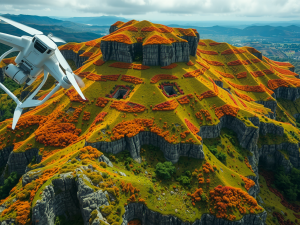

Innovative technologies are reshaping our approach to ecosystem observation and assessment. Unmanned aerial vehicles have emerged as powerful tools in this field, capable of rapidly surveying extensive regions and gathering essential data that conventional methods may overlook.
For example, drones equipped with thermographic sensors can identify temperature fluctuations within forests, revealing areas experiencing heat stress in vegetation.
Such insights are pivotal for evaluating ecosystem health and informing conservation strategies.
These aerial devices play a significant role in wildlife monitoring, including precise tracking of endangered species and detailed habitat mapping. Uniquely, they enable real-time data collection, which facilitates prompt responses to shifts in environmental conditions.
As advancements continue, the applications of these vehicles in environmental monitoring are becoming increasingly diverse, providing fresh perspectives on biodiversity and habitat dynamics. This innovative methodology enhances our comprehension of natural processes and bolsters long-term sustainability initiatives.
The importance of drones in conservation efforts is evident through their ability to provide critical insights into ecological systems.
By employing UAVs for aerial surveys, conservationists can obtain high-resolution images and data integral for assessing environmental conditions. Mapping initiatives, which utilize techniques such as drones for environmental monitoring and thermography, play a crucial role in conservation biology by providing valuable data on ecosystems and species at risk.
Click here to learn more about: contact
The Importance Of Drones In Conservation
The integration of aerial technology has revolutionized approaches to conserving our planet’s ecosystems. These tools enable access to remote or challenging environments, making it possible to gather important ecological data that might otherwise remain hidden.
For wildlife observation, drones play a significant role by allowing researchers to monitor animal populations and assess their habitats more accurately than traditional methods.
Uniquely, drones equipped with multispectral sensors reveal the health of vegetation, a vital aspect for maintaining biodiversity across various natural environments.
Operating at a fraction of the cost and time of conventional surveying methods, these devices not only enhance data collection but also streamline rapid responses to environmental threats like deforestation and habitat loss. The use of these innovative machines marks a pivotal change in the techniques employed for nature conservation, ultimately improving our strategies to protect wildlife and their habitats.

How Drones Enhance Environmental Monitoring
The integration of unmanned aerial vehicles has revolutionized the way scientific research is conducted across various environmental domains. By utilizing these advanced tools, researchers can gather data on expansive areas quickly, revealing intricate details about habitats and ecosystems.
An innovative application includes the deployment of thermographic cameras, which can identify temperature variations in water, serving as a critical indicator of climate change or the presence of endangered species.
Drones fitted with multispectral sensors can monitor vegetation health, detecting stress before visible signs emerge.
This proactive method allows timely interventions in conservation strategies. UAVs enable surveillance of remote landscapes, providing crucial information related to poaching and illegal activities.
This capability empowers resource managers and environmentalists to make informed decisions about natural disaster responses and the safeguarding of habitats.
UAVs in Environmental Research
- UAVs can cover large areas quickly, enhancing data collection efficiency.
- Thermographic cameras on drones can detect temperature changes, indicating climate shifts.
- Multispectral sensors help monitor vegetation health, allowing early detection of stress.
- Drones provide surveillance of remote areas, aiding in the fight against poaching.
Utilizing Drones For Wildlife Observation
Recent advancements in aerial technology have allowed for innovative approaches to observing wildlife, enabling researchers to collect data with minimal disruption to natural habitats. This non-invasive methodology plays a significant role in studying elusive species and accurately monitoring their populations.
For instance, few are aware that drones outfitted with thermal imaging sensors can identify animals concealed by dense vegetation, yielding valuable insights into their behaviors and movements.
Such data not only assists ecological research but also enhances conservation efforts through the identification of vital habitats.
The efficiency of drone operations allows for the surveying of extensive areas more effectively than traditional methods like helicopters, which also reduces operational costs. As this technology evolves, the prospects for real-time data collection will greatly improve our comprehension of biodiversity and ecosystem dynamics.
The incorporation of these tools within wildlife observation strategies fosters enhanced management of ecosystems and informs policy decisions surrounding conservation.
Advantages Of Thermal Imaging In Ecosystems
Utilizing advanced imaging techniques offers a transformative approach to understanding the intricate relationships between wildlife and their habitats. One notable application is the enhanced detection of wildlife.
Researchers can effectively track wildlife populations, even in difficult-to-access areas or at night, through the ability to detect heat signatures.
This capability is vital for identifying elusive species that would typically remain hidden from view.
Monitoring habitat health serves as another important function of this technology.
By analyzing temperature variations in vegetation, scientists can gauge stress levels, moisture content, and possible disease indicators. This method enables the identification of invasive species by observing the temperature changes occurring in areas where competition is present, thus aiding in conservation efforts.
The integration of drones equipped with thermal sensors further enhances the efficiency of ecological surveys.
These drones can cover large areas rapidly, collecting real-time data that is essential for effective management strategies. Their ability to conduct aerial surveys allows for detailed monitoring of ecosystems, contributing significantly to wildlife conservation and resource management initiatives.
Advanced Imaging Techniques in Wildlife Conservation
- Advanced imaging techniques allow for the enhanced detection of wildlife through heat signature tracking, enabling researchers to monitor populations in challenging conditions.
- Temperature variations in vegetation can indicate habitat health, helping scientists assess stress levels and identify potential diseases in ecosystems.
- Drones equipped with thermal sensors can conduct aerial surveys quickly, providing real-time data crucial for effective wildlife management and conservation strategies.
Drones In Managing Natural Disasters
The integration of advanced aerial technology has transformed how assessments are conducted during emergencies. Drones used for environmental monitoring can quickly gather real-time data from affected areas, allowing agencies to make informed decisions.
Equipped with high-resolution cameras, these devices capture detailed imagery, significantly enhancing mapping efforts vital for disaster response.
Their effectiveness is particularly evident during wildfires, where rapid evaluation of the spread and severity can be crucial.
These unmanned aerial vehicles also excel in early detection processes, identifying changes in water quality or deforestation patterns in coastal regions. This capability aids conservation strategies and helps protect various natural habitats following significant disruptions.
As UAV technology evolves, the efficiency of rescue initiatives and recovery planning improves, mitigating the impact on local communities and resources.
The Role Of Uavs In Biodiversity Tracking
Unmanned aerial vehicles have revolutionized the methods used to assess wildlife within diverse ecosystems. These advanced machines offer remarkable capabilities for tracking wildlife populations and evaluating the health of natural habitats.
For example, drones equipped with multispectral sensors can detect variations in plant health and identify different species while minimizing disturbance to their surroundings.
Such non-intrusive approaches are particularly beneficial for studying species often found in hard-to-reach areas, like dense forests and remote wetlands.
Drones play an integral role in monitoring migratory patterns, enhancing insight into the dynamics of ecosystems. By flying at varying altitudes, these devices can efficiently gather comprehensive data over large areas, revealing details that conventional techniques might miss.
The high-resolution imagery collected allows conservationists to implement informed strategies for protecting endangered species and ensuring the balance of fragile ecosystems.
Unmanned Aerial Vehicles in Wildlife Assessment
- Drones equipped with multispectral sensors can detect variations in plant health and identify different species.
- Non-intrusive approaches minimize disturbance to wildlife, making it easier to study species in hard-to-reach areas.
- Drones can monitor migratory patterns, providing valuable insights into ecosystem dynamics.
- High-resolution imagery allows conservationists to develop informed strategies for protecting endangered species.
Real Time Data Collection With Drones
The advent of unmanned aerial vehicles has transformed methodologies for gathering vital information across various domains. These innovative systems enable extensive coverage of hard-to-reach areas, greatly enhancing the quality of the data collected.
For instance, drones equipped with thermal cameras play a significant role in monitoring water temperature in wetlands, allowing researchers to track subtle ecosystem changes that would otherwise remain inaccessible.
This approach is particularly advantageous in environmental monitoring, as it facilitates the identification of areas impacted by poachers or significant environmental shifts.
By deploying a robust drone fleet, organizations can efficiently collect multispectral data, thereby accelerating the pace of data collection while significantly reducing costs compared to conventional methods. This cost-effective strategy not only expedites the gathering of information but also ensures a more thorough spatial analysis, aiding in effective resource management.
Protecting Endangered Species With Aerial Technology
The use of aerial technology has transformed monitoring efforts for threatened wildlife populations. Drones equipped with advanced sensors can cover large geographic areas efficiently, which is particularly valuable during environmental events from wildfires to hurricanes.
These airborne tools enable conservationists to respond quickly, implementing necessary measures to protect vulnerable animal populations.
Thermal imaging capabilities enhance the ability to locate wildlife concealed in dense jungle environments, facilitating non-intrusive tracking of movements and behaviors.
Aerial surveys produce high-resolution images and videos, aiding in identifying pollution sources affecting habitats and maintaining water quality. Advancements in learning algorithms improve data analysis, enabling conservationists to make informed decisions based on real-time information.
As these technologies continue to advance, their significance in protecting and preserving biodiversity will become increasingly evident, helping to ensure the safety of various ecosystems.
Aerial Technology in Wildlife Conservation
- Drones can cover large areas quickly, improving response times during environmental emergencies.
- Thermal imaging technology allows for the detection of wildlife in dense habitats without disturbing them.
- Aerial surveys provide high-resolution imagery to identify pollution sources and assess habitat health.
- Advancements in data analysis algorithms enable real-time decision-making for effective conservation strategies.