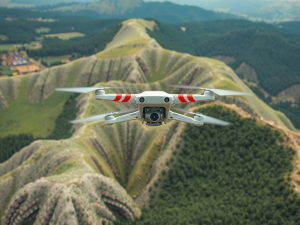

The utilization of advanced technology in the gathering of essential geographic data has transformed numerous industries. Drones have emerged as a primary tool for this purpose, capturing high-resolution images and precise information necessary for informed decision-making.
A lesser-known aspect of this technology is the ability of drones equipped with Lidar to penetrate tree canopies, allowing for the collection of topographical data that traditional methods cannot access.
This capability significantly enhances the accuracy of environmental assessments and land surveys, leading to more reliable outcomes.
Compliance with industry standards is vital, ensuring that these practices follow safety regulations set forth by authorities like the FAA. The integration of Geographic Information Systems (GIS) with aerial data enhances spatial analysis, providing a more comprehensive understanding of land use and resource management.
Continuous innovations in drone technology are driving improvements in efficiency, precision, and accessibility for data collection processes. This evolution is particularly relevant for industries requiring specialized mapping solutions, catering to diverse project needs with tailored aerial survey services.
Click here to learn more about: contact
Importance Of Aerial Photography
Utilizing aerial imagery has transformed the way various industries approach data collection and visual analysis. High-resolution captures from unmanned aerial vehicles significantly enhance the visualization of data, allowing for a clearer interpretation of analytical mapping results.
This integration of aerial visuals with quantitative data results in improved decision-making processes, particularly in resource management and urban planning.
Another notable aspect is the ability of drones to access remote and complex landscapes that are typically difficult to survey, such as rugged mountains or thick forests.
These capabilities are particularly advantageous for industries focused on environmental monitoring and construction, where timely access to accurate data is crucial. Interestingly, UAVs equipped with sophisticated sensors can collect both aerial imagery and ground-level details concurrently, leading to improved accuracy in data representation.
The use of Lidar technology within these systems has marked a significant advancement in topographic mapping, enabling precise elevation models and terrain analysis. Consequently, aerial photography is not merely supplementary; it serves as an indispensable component of modern data collection practices across various sectors.

Understanding Drone Technology
The integration of advanced technologies into aerial surveying has transformed the landscape of data collection across various sectors. Equipped with sophisticated sensors, these aircraft can navigate challenging terrains to gather information that would be difficult or impossible to obtain through traditional survey methods.
For instance, remote sensing capabilities allow for precise monitoring of environmental changes, particularly in regions impacted by natural disasters, providing invaluable insights for timely interventions.
High-resolution imaging techniques enable the capture of fine details necessary for accurate mapping, which plays a crucial role in industries such as construction and agriculture.
As organizations seek to optimize their operations, the efficiency of aerial surveys becomes increasingly apparent, as they significantly cut down on time and costs when compared to conventional approaches. Utilizing advanced methodologies like photogrammetry and multispectral imaging further enhances the quality of the data collected, making it applicable for large-scale projects that require meticulous planning and execution.
Capturing Detailed Data
The utilization of aerial devices has significantly reshaped how precise information is gathered across various sectors. Equipped with advanced technology, these unmanned aerial vehicles (UAVs) excel in collecting high-resolution images, facilitating meticulous mapping and spatial analysis.
This capability allows stakeholders to visualize and interpret complex landscapes and properties with remarkable clarity.
Among the less recognized features, drones fitted with sensors such as Lidar and multispectral imaging extend beyond conventional photography.
These sensors enable not only 3D mapping but also offer invaluable insights critical for ecological assessments and construction initiatives. The enhanced equipment accessibility empowers users to survey difficult terrains effectively.
Adopting these innovations necessitates adherence to best practices and compliance with regulations, ensuring the integrity of the collected data. Improved data acquisition bolsters project management and fosters informed decision-making across diverse industries.
Navigating Aerial Survey Techniques
The evolution of technology in data collection has led to remarkable advancements in the field of surveying. Drones equipped with sophisticated sensors can capture data with astounding accuracy.
For instance, photogrammetry serves as a powerful method for creating three-dimensional models by processing overlapping images taken from various angles.
This technique transcends mere mapping; it plays a vital role in identifying changes in terrain over time, crucial for construction projects and environmental assessments.
Another noteworthy technique includes Lidar, which employs laser pulses to measure distances and produce detailed elevation maps.
Such capability is particularly significant for flood risk assessments and managing forestry resources. Multispectral imaging collects data across multiple wavelengths, offering insights into crop health, thus enabling farmers to estimate yield potential more effectively.
As aerial survey technology advances, leveraging these techniques can significantly enhance project accuracy, data collection, and overall efficiency, setting a new standard in various industries.
Transitioning to the next phase of aerial data utilization, ensuring accuracy and precision becomes paramount. This involves careful flight planning and adherence to regulatory guidelines.
By integrating advanced sensors and data processing methods, stakeholders can better interpret the information collected. Through these comprehensive approaches, the full potential of drone and UAV mapping services can be realized, ultimately leading to informed decision-making and improved outcomes across diverse fields by enabling precise model creation, identifying key specifications, estimating necessary resources, conducting detailed surveys, and utilizing advanced techniques in data collection, sensor integration, and high-resolution camera capabilities to capture data in context.
Ensuring Accuracy And Precision
Aerial surveys leverage advanced technology to achieve high levels of data collection reliability. UAV services play a significant role, particularly in fields such as construction and environmental monitoring.
Various methodologies are involved in aerial mapping, with techniques like photogrammetry and multispectral imaging enhancing the detail captured during the process.
The performance of a drone’s data can vary depending on factors such as sensor quality and meticulous flight planning.
For example, UAVs can obtain data over vast areas more efficiently than traditional methods, covering extensive terrains in a fraction of the time typically required. This capability supports numerous applications, from topographic mapping to volumetric analysis.
It is also important to adhere to FAA regulations to maintain data integrity throughout the surveying process. Each project’s unique scope necessitates specific approaches to structure the final deliverables, ensuring they meet intended accuracy standards.
Exploring Topographic Mapping
Creating detailed representations of terrain can significantly enhance various industries and applications. Aerial imaging technology has transformed how professionals capture and analyze geographical data.
Drones equipped with sophisticated sensors deliver high-resolution imagery, revealing intricate landscape features that traditional methods often overlook.
A pivotal factor in this evolution is Lidar technology, which employs laser pulses to accurately measure elevations, resulting in comprehensive 3D models.
Many may not realize that utilizing unmanned aerial vehicles (UAVs) for mapping can streamline project timelines, drastically reducing the time required for data collection. This operational efficiency is particularly beneficial for sectors such as construction and agriculture, where understanding land usage and resource distribution is crucial.
Compliance with regulations regarding drone operations is necessary to ensure safety and legality, fostering a responsible approach to technology deployment. The ability of UAVs to survey terrains that are otherwise inaccessible has reshaped modern mapping practices, offering new insights and enhancing data analysis capabilities.
As advancements continue, the integration of various aerial survey methods enhances the precision and applicability of collected data.
| Technology | Benefits |
|---|---|
| Aerial Imaging | Transforms geographical data capture and analysis |
| Lidar Technology | Accurately measures elevations for 3D modeling |
| UAVs | Streamlines project timelines and enhances operational efficiency |
| Regulatory Compliance | Ensures safety and legality in drone operations |
Regulations For Data Collection
Effective management of compliance with legal requirements forms a cornerstone for successful aerial mapping initiatives. The Federal Aviation Administration (FAA) has established stringent guidelines governing drone operations, particularly concerning airspace entry and altitude restrictions.
Interestingly, many local jurisdictions mandate additional permits for commercial drone activities beyond FAA standards, adding a layer of complexity to project planning.
For example, when using Lidar technology for data collection, operators must remain vigilant about privacy regulations designed to protect individuals in densely populated regions.
Improper handling of data collection methods can lead to significant concerns, underscoring the importance of adhering to established rules. Compliance not only enhances project legitimacy but can also yield valuable insights that drive operational efficiency.
Comprehensive knowledge of relevant regulations helps ensure that aerial surveys are executed legally while maximizing the advantages of advanced mapping techniques. Understanding these guidelines facilitates a smoother transition from the exploration of topographic mapping to the assessment of associated costs and efficiency in subsequent phases of aerial survey projects.
Evaluating Costs And Efficiency
Utilizing advanced aerial services offers remarkable advantages for various industries. Drones provide a unique method for gathering accurate data while minimizing both time and labor expenses.
For instance, the ability to capture detailed 3D imagery enhances the precision with which surveyors can measure distances, significantly improving project outcomes.
Costs can vary widely based on factors such as terrain complexity and the specific data requirements for each project.
UAVs generally require less maintenance than traditional surveying equipment, which can contribute to lower long-term expenses. The inclusion of GPS receivers in drone technology enables real-time adjustments, thus optimizing efficiency during operations.
The processed data can be easily integrated with Geographic Information Systems (GIS), allowing for comprehensive analysis and facilitating better-informed decision-making. Familiarizing oneself with these elements is beneficial when selecting the best solution for specific mapping needs.
Aerial Survey Case Studies Mapping With Drones
Aerial Survey Software Solutions Unique Aerial Mapping Types