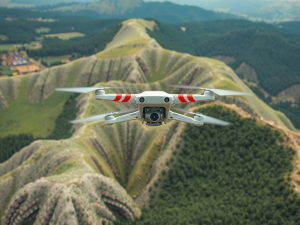

The integration of unmanned aerial vehicles into surveying practices has revolutionized how data is collected across numerous sectors. Traditional surveying methods often demand considerable time and resources; in contrast, drone technology enables rapid data acquisition that can reduce project timelines by as much as 80%.
This remarkable efficiency can lead to significant cost reductions, particularly in industries such as construction and real estate.
Unmanned aerial vehicles possess the capability to access difficult terrains that are often unmanageable for conventional methods.
Many individuals may not be aware that the high-resolution imagery obtained during these surveys greatly enhances data accuracy, ultimately improving project outcomes. The detailed aerial imagery produced can support precise mapping, which is crucial for effective planning and resource management.
Click here to learn more about: contact
Understanding Drone Surveying Benefits
Utilizing innovative technology transforms the landscape of data collection and mapping ventures. Drones have the capability to efficiently cover extensive terrains, making them particularly advantageous for projects that span numerous acres.
A noteworthy aspect of UAVs is their ability to gather detailed information through advanced techniques like Lidar, which creates intricate 3D point clouds that uncover topographical features often concealed from view.
This precision greatly enhances spatial analysis, especially in terrains where traditional methods might fall short.
Aerial photography captured during drone flights enriches the data by providing essential visual context that informs decision-making processes. Drones excel in conducting inspections of inaccessible areas, thereby mitigating risks typically associated with manual surveying methods.
The seamless integration of drone technology not only streamlines workflows across diverse industries—ranging from construction to agriculture—but also enables innovative approaches for data collection that were previously unfeasible, ultimately influencing numerous factors related to aerial survey costs and efficiencies.

Cost Factors Influencing Aerial Surveys
Understanding the elements that determine expenses associated with aerial surveys can reveal unexpected insights. Utilizing advanced drone technology leads to substantial cost reductions in comparison to traditional surveying methods.
Notably, the decrease in labor requirements and faster project turnaround times contribute significantly to overall savings.
Employing high-resolution sensors, such as Lidar, enables the creation of accurate topographic maps; however, these sophisticated tools may also lead to increased project costs.
The complexity and scale of each survey project further impact pricing, with larger undertakings necessitating specialized data processing software. Compliance with FAA regulations is another factor influencing expenses, as these costs vary depending on project type and geographical location.
Market conditions, including local demand and seasonal trends, play a critical role in determining the overall survey cost. Clients who grasp these various components can allocate their budgets more effectively for drone surveying needs.
Adapting to these considerations not only facilitates smoother project execution but also reduces potential risks associated with aerial surveys, aligning well with the technological benefits highlighted in previous discussions.
Transitioning into equipment specifics is essential for maximizing the efficiency of drone services.
Aerial Surveys
- Advanced drone technology can lead to substantial cost reductions compared to traditional surveying methods.
- High-resolution sensors, such as Lidar, enable the creation of accurate topographic maps, though they may increase project costs.
- Project complexity and scale significantly impact pricing, with larger projects requiring specialized data processing software.
- Compliance with FAA regulations and market conditions, including local demand and seasonal trends, also influence overall survey costs.
Essential Drone Equipment For Surveys
Selecting the appropriate tools and technologies is imperative for conducting effective aerial surveys. High-resolution RGB cameras capture intricate imagery, significantly benefiting mapping endeavors.
Multispectral cameras are instrumental for agricultural assessments, as they detect subtle variations in plant reflectance, revealing insights into crop health.
Meanwhile, LiDAR sensors offer precise topographic data, which is paramount for projects in construction and environmental monitoring.
Efficient data collection is facilitated by autonomous flight controllers, which optimize flight paths to enhance reliability and accuracy.
Real-time processing software integrates the gathered information seamlessly, improving the quality of deliverables. Ground Control Stations (GCS) ensure operational safety and positioning precision, particularly with the advancements in GPS technology ensuring robust data for effective analysis.
For extensive data collection tasks, high-capacity memory cards are necessary to accommodate large volumes of information.
Cloud storage options provide secure and reliable backups, safeguarding data integrity. Implementing fail-safe mechanisms is crucial for compliance and safety during inspections, underscoring the importance of specialized equipment in achieving successful surveying outcomes.
Comparing Traditional And Drone Surveying
Technological advancements have transformed the landscape of mapping and data collection, particularly through the use of unmanned aerial vehicles (UAVs). Conventional methods often rely on equipment such as total stations and GPS devices, which are typically labor-intensive and time-consuming.
In contrast, drone-based approaches can generate a detailed point cloud of a surveyed area in a fraction of the time, capturing intricate topographic features with remarkable efficiency.
One notable aspect of UAV technology is its capability to safely survey hard-to-reach locations, such as steep terrains and dense forests, which can be difficult for traditional surveying equipment.
This accessibility not only enhances safety for operators but also ensures thorough data coverage across diverse environments.
For example, drones equipped with thermal imaging sensors can conduct environmental monitoring and offer insights into infrastructure conditions. Such advancements streamline the mapping process and reduce the overall costs associated with labor and equipment, particularly beneficial for those needing specialized mapping services.
As the discussion transitions towards aerial survey pricing, it’s important to consider the specific applications that each method offers.
Drones are particularly effective in industries such as construction, agriculture, and environmental analysis, allowing for precise and efficient data collection tailored to the unique demands of each project.
Key Considerations For Aerial Survey Pricing
Several factors influence the pricing associated with aerial survey projects, many of which may not be immediately apparent. The scope of work plays a significant role; larger areas typically drive up costs due to extended flight durations and intricate processing of the collected drone data.
If a project necessitates advanced drone technologies like Lidar or photogrammetry, these requirements can substantially elevate overall expenses.
The costs tied to technology and equipment are also noteworthy, with high-resolution cameras and specialized sensors contributing to the pricing structure.
Ongoing maintenance of UAVs adds to the cumulative operational costs, impacting budget considerations.
Regulatory compliance is another critical factor. Adhering to local aviation regulations includes obtaining necessary permits, which can influence financial commitments.
Engaging certified operators ensures adherence to these regulations while introducing further expenses.
The data processing component varies significantly. The complexity of deliverables can range from basic two-dimensional maps to advanced analytical reports, influencing total costs.
Recognizing these factors empowers clients to make informed decisions regarding drone pricing and service engagement, ultimately aiding in efficient project execution.
This understanding also serves as a bridge to exploring the value maximization possibilities within drone data collection.
Maximizing Value In Drone Data Collection
Leveraging advanced technologies for data collection can revolutionize various industries, yet many still underutilize these innovations. Drones equipped with Lidar payloads enable the collection of highly detailed topographic information, revealing insights often overlooked by conventional methodologies.
This method facilitates swift and precise data acquisition, particularly advantageous for large-scale surveying and mapping endeavors.
Depending on the type of project, integrating sophisticated imaging technologies can significantly enhance both the quality of the gathered data and its processing speed.
For example, multispectral imaging can effectively assess vegetation health, an important aspect in environmental monitoring and agricultural management. Meticulous flight planning contributes to optimal data capture while ensuring compliance with regulatory standards.
When industries embrace cutting-edge UAV solutions, they can significantly improve their data collection processes, informing better decision-making and operational strategies.
Advanced Technologies in Data Collection
- Drones with Lidar payloads can capture detailed topographic data that traditional methods may miss.
- Multispectral imaging is effective for assessing vegetation health, aiding in environmental monitoring.
- Careful flight planning enhances data capture quality and ensures regulatory compliance.
- Adopting UAV technologies can lead to improved decision-making and operational efficiency across industries.
The Future Of Aerial Surveying Technology
Advancements in technology are reshaping the landscape of mapping and data collection. Drones are revolutionizing the way high-quality images are captured, yielding orthomosaic maps that present unparalleled detail.
These maps can achieve remarkable resolutions of 120 per acre, allowing for profound spatial analysis across different sectors.
As artificial intelligence and sophisticated sensor systems, such as LiDAR, become integrated into surveying practices, they promise to enhance both accuracy and efficiency.
Drones excel in surveying infrastructure and terrains that may be less accessible, making them particularly suitable for complex projects in construction and environmental monitoring. The evolution of UAV surveying is not only about producing superior outputs; it also aims to streamline workflows and lower overall expenditures.
This transformation holds vast potential for land development and real estate sectors, providing everything you need to facilitate informed decision-making in resource management.
Transitioning from the impact of technology, it is essential to explore real-world applications of these advancements. Aerial surveys using UAVs have diverse uses including efficient topographic mapping and environmental assessments.
The ability to collect high-resolution imagery quickly opens new possibilities for industries ranging from agriculture to mining.
Real World Applications Of Drone Surveys
The integration of UAV technology is revolutionizing the way various sectors approach mapping and data collection. Equipped to traverse remote regions, these aerial vehicles gather essential information while minimizing the risks typically associated with conventional surveying.
Advanced methodologies, including Lidar and multispectral imaging, facilitate precise topographic mapping and comprehensive analysis.
Drones produce intricate orthomosaic maps, significantly enhancing project planning processes, particularly in industries like agriculture and construction.
The costs associated with traditional surveys may vary depending on the project’s scope, yet aerial services generally present a more economical choice. New opportunities for promoting businesses emerge from stunning aerial visuals, which can elevate marketing videos and brand visibility.
Compliance with regulatory frameworks remains crucial in ensuring safe operations, fostering public confidence in these innovative technologies.