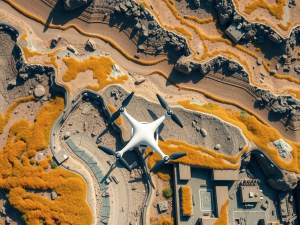

Technological advancements in the use of unmanned aerial vehicles have revolutionized data collection across multiple sectors. These aerial systems capture high-resolution imagery and precise measurements from locations that are often difficult to access, overcoming limitations posed by traditional surveying techniques.
Incorporating sensors such as Lidar and multispectral imaging significantly enhances the richness of the data gathered, enabling more comprehensive analyses.
Employing meticulous flight planning not only increases efficiency but also streamlines the data collection process, ultimately expediting project timelines.
A lesser-known fact is that UAVs typically exhibit a reduced environmental impact compared to conventional aircraft, making them a more sustainable option for aerial data collection. The detailed imagery obtained through aerial photography adds critical visual context, which supports informed decision-making.
Adhering to best practices and safety regulations will ensure that organizations can harness these technologies effectively, yielding accurate results and innovative insights.
Click here to learn more about: contact
Understanding The Importance Of Accuracy
Precision stands at the core of all successful aerial mapping projects, impacting various industries reliant on accurate data. Aerial surveys conducted using drones leverage sophisticated measurement techniques to create maps that meet specific requirements.
An intriguing aspect is how altitude affects image quality; flying at higher elevations can diminish resolution, while lower altitudes enhance detail clarity.
Environmental variables, particularly lighting conditions, also significantly influence the outcome.
For example, during periods of low light or overcast skies, the camera lens may fail to produce sharp images, which can compromise the integrity of the captured information. Cutting-edge technologies like LiDAR and photogrammetry are designed to address these issues, enabling more dependable data acquisition.
Drones equipped with these advanced systems can efficiently gather large data volumes, thus accommodating diverse project needs.
Transitioning from best practices in aerial surveys, the tools required for effective mapping play a crucial role in ensuring high accuracy in results. Utilizing the right technologies and techniques enables aerial surveyors to achieve optimal outcomes in their mapping endeavors.

Essential Tools For Effective Mapping
Precision in surveying is greatly enhanced through a variety of advanced technological tools. A prominent resource in this field is the unmanned aerial vehicle (UAV), which caters to diverse mapping tasks with remarkable efficiency.
Drones equipped with high-resolution sensors excel in gathering extensive aerial data quickly, capturing details often missed by traditional methods.
For example, these systems can cover large areas in significantly less time compared to manned helicopters, which leads to reduced operational costs.
Incorporating LiDAR technology with UAVs further amplifies their capabilities, allowing them to penetrate dense vegetation and produce accurate ground models. This feature is particularly advantageous for environmental monitoring, where precise terrain data informs critical decisions.
Sophisticated data collection software enhances the processing of gathered information, converting raw data into actionable maps.
Together, these tools minimize risk by ensuring extensive coverage across various survey areas, which is essential for informed decision-making in sectors such as construction, agriculture, and environmental assessment
UAVs in Surveying
- Drones can cover large areas much faster than manned helicopters, leading to reduced operational costs.
- UAVs equipped with LiDAR technology can penetrate dense vegetation to produce accurate ground models.
- High-resolution sensors on drones capture extensive aerial data, revealing details often missed by traditional methods.
- Advanced data collection software transforms raw data into actionable maps for improved decision-making.
The Role Of Drones In Modern Surveys
Significant advancements in technology have reshaped how mapping is conducted in various industries, leading to the widespread adoption of aerial vehicles for this purpose. These unmanned aerial vehicles utilize high-resolution imagery to facilitate accurate data collection over expansive terrains, often reducing the time needed for traditional surveying methods.
Equipped with tools such as Lidar and photogrammetry, these systems can generate highly detailed 3D models with exceptional precision, which proves invaluable in fields like construction and environmental monitoring.
The ability to conduct assessments from elevated altitudes allows for comprehensive spatial analysis, vital for informed decision-making.
These innovative UAVs can access hazardous or remote locations, enhancing data acquisition capabilities while ensuring workforce safety. The implementation of ground control points (GCPs) further refines the accuracy of collected aerial data.
As technology progresses, adherence to best practices in flight planning and regulatory compliance will be increasingly important for optimizing the benefits derived from these powerful tools.
Key Factors Impacting Data Collection
Effective strategies in gathering information are key to maximizing the potential of aerial surveys. The technological capabilities of UAVs play a significant role, employing various sensors such as Lidar and multispectral imaging to gather data.
This use of aerial technology leads to high-resolution outputs, which are indispensable for applications like environmental monitoring and construction planning.
Environmental conditions, including factors like weather and topographic features, significantly influence the quality of acquired data.
For example, the integration of control points is necessary for photogrammetric accuracy, as it ensures proper alignment of images during analysis.
Depending on the project’s complexity, specific UAV mapping techniques can be employed to enhance coverage and detail.
Aerial photography further complements surveying by providing visual context to the collected data, making it easier to interpret results. Knowledge of these aspects improves both planning and execution within the world of aerial surveys, leading to increased effectiveness and reliability in data collection.
As the discussion shifts towards advanced techniques, an exploration of methods for achieving high-resolution aerial photography will reveal how technological advancements continue to shape this field.
| Technology Used | Application |
|---|---|
| UAVs with Lidar | Environmental Monitoring |
| Multispectral Imaging | Construction Planning |
| Control Points | Photogrammetric Accuracy |
| Aerial Photography | Data Interpretation |
Techniques For High Resolution Aerial Photography
High-quality imagery captured from above plays a significant role across various sectors, offering detailed visual data that informs a wide range of decisions. Drones equipped for these tasks can produce images so clear that industries such as construction and environmental monitoring rely on them for comprehensive analysis.
Utilizing diverse sensors, including multispectral cameras, enables the compilation of valuable information beyond basic visuals.
For instance, multispectral imaging provides insights into plant health by detecting wavelengths undetectable to the naked eye.
Maintaining specific flight paths enhances the quality of data collected, as these routes can be programmed for uniform coverage over expansive terrains.
Advanced software applications facilitate the generation of orthomosaics, which are crucial for accurate mapping and analysis. For those engaged in conducting aerial surveys, investing in quality equipment typically entails expenditures ranging from hundreds to thousands of pounds, reflecting the sophistication required for optimal performance.
Transitioning from data collection to effective flight planning involves recognizing the best practices that should be employed.
Proper preparation and attention to detail contribute significantly toward improving the accuracy and reliability of the images obtained, aligning well with the needs of professionals seeking high-resolution outputs. Thus, understanding the techniques involved is paramount for those aiming to leverage aerial solutions for enhanced project outcomes, especially when conducting aerial surveys and mapping analysis to collect high-quality multispectral data that can be used to calculate ground control requirements, which can range from hundreds to thousands of pounds; contact DJM Aerial Solutions today at.
Best Practices For Flight Planning
Effective preparation for aerial missions significantly influences the accuracy of captured data. Establishing specific project objectives serves as a guiding principle for determining the area of interest and the optimal strategies to be applied.
The landscape’s characteristics can significantly affect flight parameters, necessitating a thorough analysis of the topography.
Drones, conducted using a variety of specialized sensors, are capable of gathering enhanced data, including sophisticated techniques like light detection and ranging (LiDAR) which yields precise terrain measurements in intricate environments.
It is also important to incorporate ground control points, which are instrumental in the georeferencing process of the captured data. Implementing robust data management practices ensures that the information collected is systematically organized and readily accessible for ongoing analysis.
Transitioning from the techniques explored in high-resolution aerial photography, it becomes essential to examine various survey methods.
Understanding these methodologies allows for a more refined approach to data collection and enhances the overall quality of the outcomes achieved in mapping projects.
Aerial Missions
- Effective preparation enhances the accuracy of data captured during aerial missions.
- Specific project objectives guide the determination of the area of interest and strategies used.
- Topography analysis is crucial as it affects flight parameters for drone operations.
- Incorporating ground control points is essential for accurate georeferencing of captured data.
Exploring Different Survey Methods
The landscape of data collection has seen significant evolution, particularly through the integration of advanced technologies like UAVs. These unmanned aerial vehicles enable precise measurements and mapping in areas that are often difficult to navigate.
Equipped with high-resolution sensors and cameras, drones can efficiently gather extensive data over large terrains.
This process allows for the creation of accurate maps and models, proving especially advantageous in fields such as construction and agriculture.
Unique Fact: Surveys conducted using drones can decrease the time needed for completion by up to 80% when compared to more traditional ground methods. UAV mapping techniques, including Lidar and photogrammetry, offer insights into aspects such as terrain variations and vegetation health, which remain hidden from the naked eye.
For those seeking answers to related questions, exploring expert resources can provide further clarity on how these innovative solutions can meet specific project needs.
The Benefits Of Using Ground Control Points
Utilizing precise reference points on the ground significantly enhances the accuracy of aerial surveys. These reference markers facilitate a seamless integration of aerial data with real-world coordinates, increasing the reliability and usefulness of the information collected.
By establishing ground markers, professionals can create orthomosaic maps at different altitudes, presenting a comprehensive view of the surveyed terrain.
This technique is particularly valued in fields such as construction, where precise measurements support regulatory compliance and informed project planning.
Research indicates that implementing these markers can reduce positional error to within 2-5 centimeters, showcasing a remarkable improvement over traditional methods. The enhanced efficiency derived from this approach results in shortened flight time and quicker project completions without compromising data quality.
Using aerial mapping with these reference points aids in adhering to airspace restrictions, reinforcing their importance in contemporary surveying practices. This method is adaptable across various sectors, emphasizing the ongoing evolution of technology in aerial, drone, or UAV mapping services.
Aerial Surveys
- Utilizing ground reference points can reduce positional error to within 2-5 centimeters.
- Ground markers enable the creation of orthomosaic maps at various altitudes for a comprehensive view.
- This technique enhances efficiency, resulting in shortened flight times and quicker project completions.
- Aerial mapping with reference points helps comply with airspace restrictions, ensuring regulatory adherence.
Photogrammetry Advancements Boost Lidar
GIS Mapping Trends 2024s Unique Path