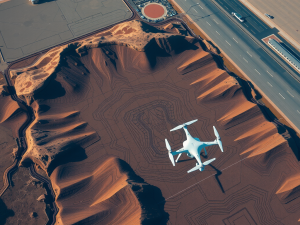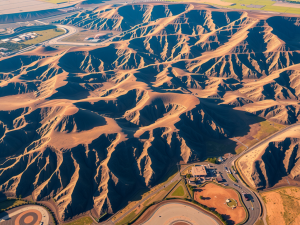

Utilizing unmanned aerial vehicles has dramatically transformed the landscape of data collection and surveying. These advanced tools streamline the process of capturing detailed imagery and information across vast areas, vastly improving efficiency compared to traditional techniques.
A notable and often overlooked use of these innovative mapping services is their role in disaster response scenarios, where they provide rapid assessments of damage in inaccessible regions, delivering vital information for emergency responders.
Beyond emergency applications, drones equipped with Lidar technology generate accurate 3D representations of terrain, which enhances environmental evaluation efforts.
The capability of UAVs to gather high-resolution visuals and multispectral data significantly boosts analytical processes, making them indispensable in sectors like precision agriculture. Local professionals in aerial mapping leverage these unique technological insights to develop tailored services, ultimately benefitting their communities.
Click here to learn more about: contact
Click here to learn more about: contact
Understanding Drone Mapping Technology
The innovation surrounding unmanned aerial vehicles has transformed traditional methods of collecting and interpreting geographic information. Drones equipped for aerial survey operations capture high-resolution imagery, enabling industries, such as infrastructure and construction, to achieve detailed visual representations of landscapes.
This advancement, particularly when using techniques like Lidar and photogrammetry, allows for the creation of intricate 3D models, which are beneficial for precise site planning.
For example, cities such as Flagstaff, Arizona, have adopted these technologies to effectively monitor environmental changes and manage valuable resources.
The integration of remote sensing capabilities with drones allows for streamlined data collection, particularly in agriculture where assessing crop health and environmental impacts is essential. As this technology continues to permeate various sectors, its potential to enhance asset management and improve decision-making processes is becoming increasingly apparent.
Transitioning to the benefits of aerial surveying reveals how these approaches not only optimize operational efficiency but also expand analytical capabilities, fostering better long-term planning and resource allocation.

Benefits Of Aerial Surveying
The advent of drone technology has revolutionized the efficiency of data collection across numerous sectors. Utilizing UAVs enables rapid data acquisition, significantly shortening the timelines associated with conventional surveying techniques.
For instance, drones can perform inspections in rugged terrains like those found in the Navajo Nation, Arizona, ensuring both safety and data integrity.
The high-resolution imagery gathered during these operations uncovers intricate details often overlooked by ground surveys, thus informing better decision-making.
Aerial surveys can incorporate advanced sensors such as LiDAR and multispectral imaging, expanding their utility in various fields including construction and environmental monitoring. These multidimensional insights yield not only topographic maps but also crucial information relevant to project planning and resource management, ultimately enhancing project results.
| Advantage of Drones | Traditional Surveying Methods |
|---|---|
| Rapid data acquisition | Longer timelines |
| Safe inspections in rugged terrains | Higher risk for surveyors |
| High-resolution imagery | Limited detail capture |
| Advanced sensors (LiDAR, multispectral) | No advanced sensor integration |
Key Applications Of Lidar In Mapping
The advent of advanced technology has transformed the landscape of mapping, significantly enhancing data accuracy and detail. A notable application involves creating topographic maps, which utilize intricate elevation data, essential for surveyors in improving land survey precision and conducting environmental evaluations.
Another significant utilization involves vegetation analysis.
This method employs canopy height models to facilitate comprehensive studies of forest dynamics and biomass, contributing notably to conservation initiatives and biodiversity examinations.
Lidar proves invaluable for infrastructure inspection, as it offers highly accurate data on structures such as roads, bridges, and power lines, thereby minimizing the hazards associated with traditional manual inspections. The technology also serves a pivotal role in flood risk assessment, where enhanced flood modeling relies on detailed terrain data to assist emergency planners in pinpointing susceptible areas.
Each of these applications illustrates the transformative impact of modern surveying techniques on contemporary mapping practices.
The Importance Of Data Collection
Effective strategies for gathering and analyzing information are crucial for organizations navigating a competitive landscape. Various industries, such as construction and environmental monitoring, utilize diverse techniques like aerial surveyors employing advanced drone mapping to obtain accurate data efficiently.
This capability enhances operational performance and enables informed decision-making.
Unique Fact: Companies that systematically integrate data analytics into their operations improve decision-making speed and accuracy by five times compared to those who do not.
Firms embracing data-driven strategies often report revenue growth rates exceeding 8-10% compared to their counterparts. As data becomes increasingly critical, challenges related to accuracy and regulatory compliance also surface.
Nevertheless, the evolution of methodologies in data collection, particularly through drone services and UAV technology, continues to bolster effectiveness and efficiency in various sectors. Transitioning from data collection methods to the inspection realm, drone technology is transforming how infrastructure assessments are conducted, ensuring comprehensive evaluations and timely insights.
Data Analytics and Drone Technology
- Organizations that integrate data analytics into their operations improve decision-making speed and accuracy by five times.
- Firms that adopt data-driven strategies often experience revenue growth rates exceeding 8-10% compared to those that do not.
- Drone technology enhances operational performance by enabling efficient and accurate data collection in various industries.
- Advanced methodologies in data collection, like UAV technology, are transforming infrastructure assessments with comprehensive evaluations and timely insights.
Enhancing Infrastructure Inspections With Drones
The application of unmanned aerial vehicles in infrastructure oversight represents a transformative shift in the industry. Drones equipped with advanced sensors and imaging capabilities can yield precise aerial data that human inspectors may overlook.
This technology facilitates access to hard-to-reach areas, such as high-rise structures and remote locations, which can pose safety risks and logistical challenges for traditional inspection teams.
Turnaround time is notably improved, as aerial surveys can be performed in a fraction of the time compared to conventional methods, dramatically lowering project completion intervals.
Drones also excel in data acquisition, employing techniques like LiDAR and photogrammetry to create highly accurate mapping and 3D models. Utilizing thermal and multispectral imaging allows for detailed assessments of material conditions, which can be pivotal in maintaining infrastructure integrity.
These advancements significantly enhance the precision and effectiveness of modern surveying services.
The importance of effective data collection cannot be overstated, as it actively influences decision-making processes across various sectors.
Accurate mapping and data interpretation are paramount in maintaining infrastructural safety and efficiency.
Transitioning to technologically advanced methods streamlines operations, making it essential for industries to adopt these innovations.
Exploring topographic mapping techniques reveals further intricacies behind effective surveying practices. The evolution of these methods offers deeper insights into environmental and infrastructural factors, ensuring robust data acquisition through accurate aerial photography and unmanned aerial drone surveying services, ultimately providing enhanced mapping and surveying throughout Arizona with a quick turnaround time.
Exploring Topographic Mapping Techniques
Innovations in data collection have significantly shaped the landscape of geographic representation over the years. Modern methodologies have transformed traditional techniques, which often lacked precision and accessibility.
The integration of professional drone technology empowers surveyors to generate intricate contour maps and detailed 3D models.
Utilizing advanced remote sensing technologies such as Lidar and photogrammetry has led to remarkable improvements in the accuracy of mapping data.
A notable feature of these techniques is their capability to create extensive point cloud data, which offers a three-dimensional view of the terrain. This three-dimensional representation is highly beneficial in fields like civil engineering and environmental monitoring, as accurate topographical information plays a critical role in influencing project results.
Drone-based mapping allows for substantial reductions in time and costs compared to conventional surveying methods while providing thorough insights into challenging-to-access areas.
| Methodology | Benefit |
|---|---|
| Drone Technology | Generates intricate contour maps and detailed 3D models |
| Lidar and Photogrammetry | Improves accuracy of mapping data |
| Point Cloud Data | Offers a three-dimensional view of the terrain |
| Drone-Based Mapping | Reduces time and costs compared to conventional methods |
Aerial Photography For Comprehensive Surveys
The introduction of drone technology has revolutionized the way surveys are conducted, providing innovative solutions to traditional methods. Equipped with advanced sensors, unmanned aerial vehicles can cover more than 500 acres per day, significantly enhancing the efficiency of data collection.
Conventional surveying techniques often demand considerable time and manpower, but aerial approaches enable quick capture of detailed visual data, allowing for better resource management.
Drones can be utilized to access difficult terrains, including areas around Flagstaff and Prescott, which might be unmanageable with standard surveying equipment.
The high-resolution imagery obtained offers comprehensive data sets that substantially improve decision-making processes across various industries. The integration of sophisticated technologies allows for survey-grade accuracy, making aerial surveys indispensable for construction and environmental monitoring.
As these practices evolve, they promise continued advancements in precision and efficiency, paving the way for more informed project planning and execution.
Choosing The Right Mapping Services For Your Needs
Evaluating the variety of services available for mapping requires careful consideration of the technologies utilized and their specific applications. The rise of drone technology allows projects, particularly those in Pima County, to incorporate high-resolution aerial imagery, resulting in precise data collection.
This advancement delivers significant time savings and reduces labor costs when compared to conventional surveying techniques.
Projects often have distinct needs that must be assessed.
For example, site work in construction frequently gains from the integration of different data collection methods, like Lidar and photogrammetry, to boost accuracy and enable thorough analysis.
It is beneficial to research providers who cater to your specific industry to ensure solutions comply with local regulations and standards.
Awareness of how aerial mapping technologies have evolved can greatly influence productivity and decision-making. Making informed choices can foster successful project outcomes in regions such as Scottsdale or Casa Grande, enhancing both efficiency and effectiveness in achieving project goals.
Drone Survey Near Me Texas Aerial Mapping
Aerial Surveyors Near Me Trust Lincolns Aerial Mapping Experts
Drone Survey Near Me Texas Aerial Mapping
Aerial Surveyors Near Me Trust Lincolns Aerial Mapping Experts