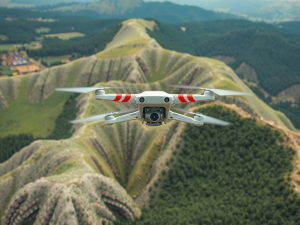

Technological innovations have reshaped methods for collecting and analyzing geographical information, significantly improving efficiency and accuracy. Unmanned aerial vehicles (UAVs) now provide the ability to conduct extensive assessments quickly, utilizing advanced imaging techniques such as photogrammetry and Lidar.
These technologies enable the creation of three-dimensional maps with a precision that surpasses that of traditional surveying methods.
Drones excel in reaching hard-to-access areas, facilitating data collection in previously prohibitive locations.
As industries recognize these advantages, aerial surveys are becoming indispensable tools for applications including environmental monitoring and construction management. The incorporation of artificial intelligence further enhances the processing and analytical capabilities of UAVs, leading to advanced data interpretation.
Click here to learn more about: contact
Revolutionizing Mapping With Drones
The emergence of advanced technologies has significantly reshaped the landscape of mapping practices. Aerial surveys conducted by unmanned aerial vehicles deliver unmatched precision and speed, fundamentally altering how data is collected and visualized.
One remarkable feature of this innovation is the incorporation of geotagging, ensuring that each image captured during the survey is accurately linked to its geographical coordinates.
This capability allows for the generation of detailed digital elevation models, making it possible to analyze and map complex terrains effectively.
In regions like Switzerland, where topography poses unique challenges, these techniques are particularly advantageous for obtaining accurate survey data. UAVs equipped with multispectral cameras can monitor vegetation health, providing farmers with invaluable information to optimize crop yields.
The diverse applications of drone technology illustrate its transformative impact on surveying, establishing it as a crucial tool in modern mapping methodologies.

Enhancing Accuracy In Terrain Analysis
The growing capabilities of modern technologies have significantly influenced data collection methods for geographic analysis. Unmanned aerial vehicles (UAVs) are now equipped to capture high-resolution images and data with unprecedented accuracy.
For example, employing drone operations enables rapid coverage of extensive areas, greatly expediting the mapping process.
An intriguing aspect of this advancement is the integration of UAVs with Lidar technology, which facilitates the generation of intricate 3D models of terrains.
These models play a vital role in environmental monitoring and resource management. The ability to survey remote or hard-to-access locations eliminates the need for manned aircraft, enhancing safety and reducing operational costs.
The precision offered by these technologies not only bolsters the accuracy of data collected but also supports informed decision-making across various sectors, including agriculture, real estate, and construction.
The Role Of Unmanned Aerial Vehicles In Surveying
The adoption of aerial systems has significantly reshaped surveying methodologies across various sectors. Drones equipped with advanced sensors facilitate real-time data collection, which can be analyzed for comprehensive insights in fields such as construction, agriculture, and environmental monitoring.
One notable aspect of this transformation is the ability of UAVs to capture high-resolution imagery, which can be processed into intricate 3D models that assist in precise land survey tasks.
The integration of drones with Geographic Information Systems (GIS) enhances project accuracy, allowing for improved spatial analysis that traditional survey methods often lack.
Many may be surprised to learn that aerial surveys can drastically reduce time and expenses compared to conventional approaches, making UAVs a strategic option for numerous industries. As technological advancements continue, the benefits of drone mapping become increasingly evident, further driving interest in the potential applications of this technology in surveying practices.
Innovations Driving Drone Technology Forward
Recent technological developments are revolutionizing the methods used in aerial data acquisition. One notable advancement involves the integration of Lidar systems into UAV services, which enables surveyors to achieve highly precise and intricate topographic mapping.
These sensors function by emitting laser pulses, measuring distances to produce detailed three-dimensional representations of the terrain.
This approach considerably enhances accuracy, especially when contrasted with traditional surveying techniques that often utilize less reliable methods.
The emergence of drones equipped with multispectral imaging sensors has significantly impacted agricultural mapping practices.
These devices provide valuable insights into crop health by analyzing various indicators such as vegetation indices, allowing farmers to enhance their yields. As the drone industry continues to evolve, autonomous flight systems are further streamlining operations by enabling drones to conduct complex survey missions with reduced human involvement.
The transition towards these advanced technologies has fostered a more efficient and effective approach to surveying tasks, which is particularly beneficial in sectors like construction and environmental monitoring.
With the capability to reach remote or difficult terrains, drones offer unparalleled access to data collection that was previously prohibitive under traditional methods. This shift not only optimizes resource management but also enhances the quality of information available for critical decision-making.
As innovations continue to unfold, the rise of drones in the surveying industry is transforming traditional methods, as advancements in drone technology and ground control points allow operators to conduct topographic surveys more efficiently and accurately compared to traditional surveying techniques, ultimately propelling the global drone surveying market forward.
Cost Efficiency In Drone Operations
The implementation of unmanned aerial vehicles in mapping and surveying has transformed operational practices across various industries. By employing drones for aerial surveying, organizations experience substantial reductions in operational expenses.
Survey costs can diminish significantly, with some estimates indicating savings of up to 50%.
Drones are used to capture high-resolution images and data, which streamlines the process and requires significantly less manpower than traditional ground surveys.
This technology facilitates the efficient execution of extensive projects, often completing tasks in a fraction of the time required by conventional methods.
The impact of drone operations is particularly notable in hard-to-reach areas where human access is limited, effectively eliminating the extra costs associated with manual surveys.
The adoption of drone technology allows for repeated surveys without incurring substantial expenses, reinforcing the sustainability of ongoing projects. As drone flight capabilities progress, opportunities to enhance operational efficiency and further decrease expenses within mapping and surveying applications continue to grow.
Transitioning to the advantages of digital elevation models, these innovations complement aerial surveying efforts.
They provide essential data for comprehensive spatial analysis, significantly benefiting sectors such as construction and environmental monitoring.
Benefits Of Digital Elevation Models
Advanced mapping technologies have significantly transformed how terrain is represented and analyzed. Digital elevation models (DEMs) serve as vital resources in aerial surveying, offering a level of detail unattainable through conventional methods.
Precision in Terrain Analysis highlights how these models provide intricate elevation data essential for applications such as flood modeling, illustrating the impact of terrain on water flow dynamics.
Such information also informs land use planning and geological evaluations, disclosing key features like slope steepness and watershed boundaries.
Moreover, Enhanced Data Integration represents another noteworthy advantage.
The ability to assimilate DEMs with various geospatial datasets, including drone imagery and GIS layers, leads to the development of comprehensive maps that enhance the quality of analysis. This integration is particularly beneficial in the construction sector, where using drones for surveying facilitates effective multi-dimensional modeling, optimizing project management and resource allocation.
As the industry evolves, adopting modern drone technology enhances not only data collection but also decision-making processes across sectors.
By employing UAVs to gather detailed elevation data, professionals can achieve higher accuracy while reducing operational costs. This advancement is reshaping infrastructure projects as teams utilize high-resolution aerial imagery and maps to inform planning and development strategies. The ongoing integration of innovative surveying techniques underscores the unparalleled efficiency and accuracy that drone surveying offers, revolutionizing the project management landscape by allowing survey teams to access hard-to-reach areas and conduct drone inspections more effectively than using traditional methods.
| Aspect | Details |
|---|---|
| Technology Used | Digital Elevation Models (DEMs) |
| Applications | Flood modeling, land use planning, geological evaluations |
| Integration Benefits | Combines DEMs with drone imagery and GIS layers for enhanced mapping |
| Cost Efficiency | Higher accuracy and reduced operational costs with UAVs |
Transforming Infrastructure Projects With Drones
The application of unmanned aerial vehicles is revolutionizing the execution of large-scale projects across various sectors. The integration of drones in surveying facilitates rapid data collection, particularly beneficial in remote locations where traditional methods may encounter logistical difficulties.
High-resolution aerial imagery captured by these devices enhances the accuracy and efficiency of project planning and monitoring tasks.
Their capability to operate in diverse environments minimizes risks associated with human surveyors, ensuring safer operations.
Project teams can utilize multiple drones simultaneously, allowing expansive areas to be surveyed quickly, ultimately leading to enhanced efficiency and cost savings in project timelines. As technology continues to evolve, the cost-effectiveness of drone solutions expands, providing innovative approaches for construction, real estate, and environmental assessments.
Building upon the advantages of precision technology, integrating drones into infrastructure monitoring not only streamlines data acquisition but also enhances decision-making capabilities.
The role of drones extends to various applications, including topographic mapping and spatial analysis, which are critical in managing complex projects efficiently. The unique data collected can significantly inform strategies for resource management and development planning.
Collaboration with local land developers and construction firms further ensures that the insights gained from aerial surveys lead to improved project outcomes, bolstering the effectiveness of infrastructure endeavors. As we look to the future of aerial surveying, the ongoing advancements in UAV technology will undoubtedly enhance the accuracy and efficiency of commercial drone applications, highlighting the critical role of drones in various industries while underscoring the importance of communication between multiple drones and the need for skilled drone operators to maximize their cost-effectiveness.
Exploring The Future Of Aerial Surveying
The advent of unmanned aerial vehicles has revolutionized the methods employed in data collection and analysis across various industries. Drones have become integral tools, allowing for high-resolution imagery and comprehensive coverage of the survey area, which enhances the precision of mapping efforts that traditional techniques often struggle to meet.
Using a drone, advanced imaging sensors and automated flight planning have recently emerged, yielding superior accuracy in topographic mapping.
Their ability to navigate hard-to-reach and rugged terrains provides substantial benefits for sectors like agriculture and construction.
Recent advancements in this field have also introduced LiDAR systems, which enable the collection of precise elevation data critical for environmental assessments. As more industries embrace these innovative solutions, the future of drone surveying promises remarkable developments, with ongoing advancements set to redefine operational standards across numerous sectors.
Drone Technology in Data Collection
- Drones provide high-resolution imagery, improving mapping precision compared to traditional methods.
- Advanced imaging sensors and automated flight planning enhance accuracy in topographic mapping.
- LiDAR systems enable the collection of precise elevation data essential for environmental assessments.
- Drones are capable of navigating rugged terrains, benefiting industries like agriculture and construction.
Remote Sensing Technology Updates NASA Earthdatas Unique Insights
Aerial Survey Technology Trends Eco Friendly Perspectives In Land Surveying