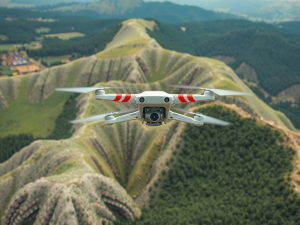

Innovations within aerial data collection have positioned recent developments in 3D imaging as significant contributors to enhancing measurement systems. The synergy between these imaging techniques and scanning technologies results in remarkably accurate information capture.
By converting aerial imagery into detailed three-dimensional structures, the quality of generated point clouds significantly improves.
A lesser-known aspect of this integration is its potential to reduce costs associated with data analysis; the visual context provided by 3D imaging aids in the interpretation of complex datasets.
The collaborative application of these advanced techniques is particularly beneficial in sectors such as construction and environmental monitoring, where precise spatial assessments are paramount. Emerging software solutions are facilitating the seamless processing of these combined datasets, leading to enhanced precision and expanded opportunities for UAV mapping initiatives.
These technological advancements not only refine the accuracy of the data but also unlock new possibilities for efficient survey operations.
Click here to learn more about: contact
Innovative Techniques In 3D Scanning
The evolution of data collection methods has reached new heights through the integration of advanced technology. 3D imaging techniques are particularly notable for their ability to create accurate representations of three-dimensional space. Unmanned aerial vehicles (UAVs) equipped with cutting-edge software are changing the landscape of data gathering and visualization.
These tools enable operators to perform precise aerial surveys that yield high-resolution imagery, which is often superior to traditional ground-based techniques.
A striking feature of this approach is its capacity to capture intricate details, enhancing the overall quality of gathered information.
When utilizing Lidar alongside photogrammetry, the fusion of detailed distance measurements with rich imaging data becomes possible. This combination not only augments the accuracy of topographic mapping but also makes it feasible to analyze vast areas more efficiently.
UAVs excel in accessing difficult terrains, facilitating comprehensive data collection in locations that may pose a challenge for conventional methodologies. The implications of these advancements are profound, particularly in sectors such as construction, real estate, and environmental monitoring, where precise mapping remains essential for effective planning and execution.
As technology continues to evolve, the role of drones in data acquisition will likely expand, promoting innovations that enhance operational efficiency. Upcoming techniques promise to further refine how information is visualized and applied, paving the way for even more sophisticated analysis and project development, particularly through the integration of software tools like 3D scanning, Lidar, and augmented reality, which utilize unmanned aerial vehicles and advanced photography to create detailed representations of topography in three-dimensional space.

Enhancing Data Collection Methods
The landscape of data acquisition has transformed significantly through the integration of aerial technologies. Drones, equipped with diverse sensors, enable the capture of high-resolution imaging and data that surpasses traditional collection methodologies.
For example, these unmanned aerial vehicles can access difficult terrains, leading to improved accuracy in remote data collection.
An often overlooked aspect is the role of photogrammetry technology, which allows drones to produce intricate three-dimensional models from aerial photos taken during their flights.
This innovative process greatly accelerates the timeline compared to conventional ground surveying methods. Using multispectral sensors provides critical insights into vegetation health, playing a significant role in environmental assessments.
The adaptability offered by customized flight paths and adjustable sensor payloads makes drone surveys applicable across various industries such as construction, agriculture, and mining. As these mapping technologies advance, operational costs decline while the precision of data analysis rises, reinforcing the importance of these methodologies in contemporary data collection efforts.
Transitioning from the advancements in aerial surveying, the exploration of how these innovations can integrate into upcoming technologies pivots to the realm of augmented reality applications.
The convergence of these fields promises to enhance visualization and interaction with collected data, leading to even more powerful applications in numerous sectors.
Aerial Technologies in Data Acquisition
- Drones equipped with sensors capture high-resolution imaging that exceeds traditional methods.
- Photogrammetry technology enables the creation of detailed 3D models from aerial photographs.
- Multispectral sensors provide vital information on vegetation health for environmental assessments.
- Customized flight paths and adjustable sensor payloads allow drone surveys to be utilized in various industries.
The Future Of Augmented Reality Applications
Emerging technologies are set to revolutionize numerous sectors, particularly through the intersection of digital overlays and real-world perspectives. The incorporation of augmented reality with aerial technology enhances data collection methods, enabling professionals to execute aerial surveys using drones that capture high-resolution images.
When combined with lidar and photogrammetry techniques, these innovations facilitate the creation of interactive 3D models, significantly improving urban planning processes.
Precise visualizations derived from surfaces created through lidar and photogrammetry not only assist in identifying potential issues before they arise but also lead to improved decision-making capabilities.
A notable fact is that AR can enhance workflow efficiency in various industries, including construction and agriculture, by superimposing vital information onto physical environments. As advances in photogrammetry continue, aerial mapping technology will benefit from high-quality data analysis tools, refining measurement and planning processes.
Ongoing improvements in drone capabilities will allow for easier access to hard-to-reach areas, resulting in enhanced data collection and spatial analysis.
Precision Measurement With Advanced Tools
Utilizing cutting-edge technology has revolutionized the process of data acquisition across multiple fields. Drones, also known as UAVs, play a significant role in this transformation, providing an efficient means for capturing high-resolution imagery and detailed information.
Photogrammetry can be used in conjunction with these aerial vehicles, facilitating the creation of intricate 3D models that represent both landscapes and structures accurately.
This innovative approach not only enhances spatial analysis but also allows for improved visualization of complex terrains.
Interestingly, aerial photogrammetry can deliver results significantly quicker than traditional surveying techniques, which often require more time-consuming methods. The advances and advantages of current imaging technology have reshaped the accuracy of datasets, surpassing those collected through terrestrial approaches.
Employing Lidar in conjunction with drones allows for creating surfaces from Lidar data, revealing fine details crucial for environmental assessments and effective resource management. As the adoption of these advanced tools continues to grow, the spectrum of potential applications expands, opening new avenues in fields such as construction, agriculture, and environmental monitoring.
Aerial Photography Meets Geospatial Science
The integration of visual technology and data measurement has significantly impacted the realm of spatial analysis. Utilizing UAV platforms allows surveyors to capture high-resolution imagery efficiently, which can be processed using photogrammetry techniques to create detailed 3D information models of various terrains.
This innovative approach facilitates extensive topographic mapping by offering a comprehensive view that traditional surveying methods often lack.
These advanced techniques enable professionals across multiple fields, such as construction and environmental monitoring, to visualize land features and make informed decisions.
Notably, the ability to quickly survey large areas reduces project timelines and costs compared to conventional practices.
UAVs equipped with specialized sensors, including those capable of capturing multispectral data, provide insights that extend beyond typical visual assessments. As technological advancements continue, the applications of these methods will enhance the precision and effectiveness of spatial analysis, reinforcing the role of aerial imagery in diverse industries.
Transforming Topography Through Effective Mapping
Innovative technologies have dramatically reshaped how data related to the Earth’s surface is collected and analyzed. Aerial mapping technology employs advanced methodologies to capture and analyze topographic data with remarkable precision.
Drones equipped with photogrammetric measurement capabilities create 3-dimensional representations of the terrain, providing insights that conventional methods often miss.
For instance, UAVs can access difficult-to-reach locations, allowing for efficient data collection in areas impacted by rugged landscapes or dense vegetation.
This often results in time savings and cost-efficiency compared to traditional surveying techniques. Utilizing multispectral imaging, these unmanned aerial vehicles contribute significantly to environmental assessments by simulating various scenarios based on the captured photographic images.
The integration of these technologies allows industries like construction and agriculture to leverage the full potential of aerial mapping in their operations. As aerial surveyors increasingly implement sophisticated tools, the accuracy of photogrammetric measurements continues to improve, paving the way for innovative applications across diverse sectors.
Aerial Mapping Technology
- Drones can access hard-to-reach locations, enhancing data collection in challenging environments.
- Utilizing photogrammetric measurement capabilities allows for the creation of accurate 3-dimensional terrain models.
- Multispectral imaging aids in environmental assessments by simulating various scenarios based on collected data.
- Adoption of advanced aerial mapping technologies leads to significant time and cost savings compared to traditional surveying methods.
Unmanned Aerial Vehicles Revolutionizing Surveys
Transformative advancements in aerial technology are reshaping surveying practices across various industries. These devices employ advanced imaging technologies and sensors, allowing for swift and precise data collection.
Traditional surveying methods often involve significant time invested in traversing difficult landscapes, while modern solutions can access challenging areas quickly, obtaining good accuracy in less time.
One unique capability of these devices is their ability to utilize multispectral imaging, a feature rarely seen in conventional surveying techniques.
This technology enables the collection of data across different wavelengths, improving accuracy and precision in analyzing vegetation health and land use. High-resolution orthomosaic maps produced through UAV surveying provide a comprehensive view of the surveyed area.
The integration of Geographic Information Systems (GIS) with UAV data has evolved from being supplementary to becoming central for spatial analysis, enhancing the resulting three-dimensional information that is critical for effective planning and decision-making across various sectors.
Transitioning from aerial mapping to point cloud modeling, it is essential to recognize how enhanced data visualization techniques contribute to informed decision-making. Effective mapping and data collection through the use of UAVs not only streamline the surveying process but also facilitate the creation of detailed point clouds.
These three-dimensional digital representations allow for meticulous analysis of terrain, structural features, and other vital aspects of the environment. Powerful software for point cloud modeling can harness the best technology to improve accuracy and precision, resulting in quicker post-processing and more reliable 3D information.
Powerful Software For Point Cloud Modeling
Transforming raw data captured from aerial perspectives into precise models is an intricate process requiring sophisticated software tools. These advanced solutions enhance the accuracy of data collection, employing effective techniques such as 3D scanning to reconstruct environments with remarkable detail.
Unique algorithms process information about physical objects, yielding high-resolution outputs applicable in various sectors including construction and environmental monitoring.
Did you know the integration of GNSS data with UAV flight missions can elevate spatial accuracy to within centimeters? Such capabilities allow for photorealistic visualizations that contribute significantly to design and planning efforts.
When evaluating software options, considering compatibility with existing scanning systems and user-friendliness becomes paramount. As machine learning progresses, future iterations of these systems may automate data classification and analysis, providing efficient solutions for demanding projects.
The prowess of these technologies is further reinforced by their ability to address specific mapping needs, permitting precise topographic assessments and spatial analyses tailored to unique project requirements.
- 3D scanning techniques enable the reconstruction of environments with remarkable detail.
- Integration of GNSS data with UAV missions can achieve spatial accuracy within centimeters.
- Advanced software tools enhance the accuracy of data collection for construction and environmental monitoring.
- Future advancements may automate data classification and analysis through machine learning.
Aerial Survey Software Solutions Unique Aerial Mapping Types
Aerial Survey Best Practices For Success