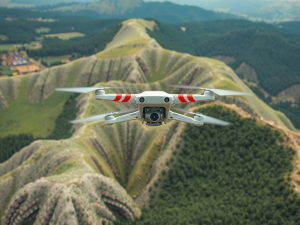

Innovations in aerial surveying are transforming the landscape of data collection and spatial analysis across various sectors. The use of UAVs equipped with advanced sensors and cameras in 2024 allows for unprecedented mapping accuracy and efficiency.
These drones can generate high-resolution images, enabling detailed topographic maps essential for effective urban planning and infrastructure management.
Their ability to survey hard-to-reach or hazardous areas enhances safety and expedites the data acquisition process.
A notable feature of UAV mapping is the integration of real-time computing capabilities, which facilitate immediate data processing and prompt decision-making. As regulations regarding drone operations continue to evolve, the applications of this technology will expand in fields like agriculture and environmental monitoring, ultimately promoting innovative approaches to resource management and sustainability.
The merging of geospatial data with machine learning algorithms will further refine analysis techniques, setting a new standard for mapping and surveying practices.
Click here to learn more about: contact
Emerging Geospatial Technologies
The advent of aerial surveys is reshaping how data is collected and utilized across various sectors. Drones outfitted with advanced sensors facilitate the capture of high-resolution imagery and comprehensive spatial data, which proves instrumental for environmental monitoring and urban planning.
For example, the application of LiDAR technology can deliver elevation measurements precise to within 10 centimeters, a level of accuracy rarely achieved through conventional surveying techniques.
The integration of these technologies with Geographic Information Systems (GIS) promotes enhanced decision-making, allowing stakeholders to analyze spatial relationships and develop strategies more effectively.
A notable feature of using unmanned aerial vehicles (UAVs) is their capability to access areas that are typically difficult to reach, such as rugged terrains or hazardous environments. This functionality not only streamlines the data collection process but also minimizes overall project expenditure.
As these technologies advance, their potential for application in various fields, such as smart city infrastructure management and transportation planning, continues to broaden, fostering innovation in both data processing and interpretation.

The Role Of Ai In Mapping
The integration of advanced algorithms has revolutionized the way geographic data is collected and analyzed in mapping. Utilizing deep learning techniques, precision in data acquisition has significantly improved, particularly when employing aerial surveys through unmanned aerial vehicles (UAVs).
For example, AI algorithms can streamline the mapping process by automatically identifying and classifying land features from high-resolution aerial imagery.
This is especially advantageous for natural disaster response scenarios, where rapid assessments can deploy vital resources efficiently.
The enhancement of real-time analytics allows for immediate insights during aerial surveys, making it possible to react swiftly to evolving situations. The combination of Lidar technology with AI capabilities further boosts terrain mapping accuracy, serving as a powerful tool for urban planning and environmental monitoring.
As developments continue, the applications of artificial intelligence in this field are widening, promoting sustainability and efficient management of natural resources.
Geographic Data Integration
- Advanced algorithms enhance the accuracy of geographic data collection and analysis.
- AI algorithms can automatically identify and classify land features from high-resolution aerial imagery.
- Real-time analytics enable immediate insights during aerial surveys for rapid disaster response.
- The combination of Lidar technology and AI improves terrain mapping accuracy for urban planning and environmental monitoring.
Innovations In Urban Planning
The landscape of city development is evolving, driven by advancements in aerial technologies and unmanned aerial vehicles (UAVs). These tools have transformed the methods by which urban planners collect and analyze geographic information, enabling faster and more accurate data acquisition.
The implementation of aerial surveys allows for detailed mapping, which is essential for visualizing intricate urban environments.
A standout feature of drone operations is their capability to survey locations inaccessible to conventional methods, thereby enhancing data collection efforts.
For example, UAVs equipped with advanced multispectral imaging technology can gather information critical to assessing the health of urban vegetation, which plays a significant role in the planning of green spaces. The precision of aerial mapping not only leads to cost savings but also streamlines project timelines, fostering more productive land use.
The integration of GIS applications facilitates real-time monitoring of urban changes, empowering stakeholders to swiftly adapt to shifting infrastructure demands.
Real Time Data Applications
Advancements in technology have led to transformative applications in various fields through the use of unmanned aerial vehicles (UAVs). These innovations enable immediate access to important information, particularly in environmental monitoring, where precise tracking of phenomena such as deforestation and water quality is essential.
Drones equipped with advanced sensors collect high-resolution geospatial data, which play a significant role in understanding and addressing environmental issues.
In the construction sector, the integration of GIS technologies enhances decision-making by providing real-time mapping visualizations that help keep projects on schedule.
The use of machine learning algorithms in processing this data promotes faster reaction times and informed choices. As this technology evolves, its implications for urban planning and construction remain extensive, offering the potential for smarter project management and efficient resource allocation.
UAV Applications
- UAVs provide immediate access to critical information for environmental monitoring.
- Drones equipped with advanced sensors collect high-resolution geospatial data for tracking deforestation and water quality.
- GIS technologies integrated into construction projects enhance decision-making with real-time mapping visualizations.
- Machine learning algorithms facilitate faster data processing, leading to informed choices in project management.
Harnessing Satellite Imagery
The evolution of imaging technology has significantly advanced data collection techniques, enhancing our understanding of geographic landscapes. This approach permits the acquisition of high-resolution images, which can be instrumental in detailed mapping efforts across extensive areas.
A lesser-known application of this technology is its capacity to improve environmental monitoring, enabling the observation of changes in land use and vegetation dynamics over time.
With the advent of machine learning algorithms, analyzing these complex datasets has become more efficient and predictive, uncovering trends in urban expansion or deforestation that are often overlooked.
The integration of UAV systems into this ecosystem further automates the data collection process, making it a vital tool for various industries, including construction and agriculture. As organizations increasingly adopt these technologies, the role of imagery in informing strategic decisions continues to expand, setting the stage for the future of GIS applications.
Transitioning from real-time data applications, the synergy between advanced imaging and GIS software is poised to redefine spatial analysis methodologies, laying a foundation for groundbreaking trends anticipated in the coming years.
Future Trends In Spatial Analysis
Innovative advancements have been reshaping how data is gathered and analyzed in recent years. UAV mapping services have emerged as powerful tools across diverse industries, enabling unprecedented precision in aerial surveys.
The incorporation of artificial intelligence allows for swift processing of intricate datasets, uncovering hidden patterns that can significantly guide strategic decisions.
The market value of GIS continues to expand as demand for location-based services grows, reflecting its transformative impact on various sectors.
Multispectral imaging and other novel data sources enhance the quality of environmental data, offering clearer insights into ecological shifts. As these trends in GIS evolve, professionals must remain adaptable to effectively leverage the benefits of these cutting-edge technologies.
Transitioning from techniques like satellite imagery to employing IoT sensors marks the next phase in spatial analysis.
The integration of IoT not only streamlines data collection but also facilitates real-time monitoring, further enhancing decision-making capabilities across sectors.
GIS and Data Analysis
- UAV mapping services provide unprecedented precision in aerial surveys across various industries.
- Artificial intelligence enables swift processing of complex datasets, revealing hidden patterns for strategic decision-making.
- The market value of GIS is expanding due to the increasing demand for location-based services.
- IoT sensors facilitate real-time monitoring and streamline data collection, enhancing decision-making capabilities.
Integrating Iot For Better Decisions
The utilization of advanced technologies reshapes traditional practices in mapping and surveying. Aerial surveyors now leverage drones equipped with various sensors to capture high-resolution images, vastly improving geographic data collection methods.
This innovative approach enables precise asset management, allowing for efficient topographic mapping and spatial analysis across multiple industries.
One unique aspect of this technology is the ability of IoT-enabled drones to automatically calibrate sensors, thereby significantly enhancing the accuracy of aerial surveys.
The integration of these devices supports real-time data transmission speeds that can reach up to 1 Gbps, facilitating the collection of vast amounts of information in a timely manner. As industries grow more reliant on GIS tools, the synergy between IoT and UAV services promotes improved decision-making efficiency, particularly in agriculture and construction sectors.
Looking ahead, the integration of blockchain technology with GIS systems presents an opportunity for secure data storage, further enhancing transparency in project management. This evolution in the geospatial revolution underscores the importance of innovative mapping practices for sustainable resource management and infrastructure development.
Sustainable Practices In Geographic Systems
Innovative methodologies in data collection are transforming how geographic areas are assessed and managed. Leveraging GIS enables efficient handling of spatial data, unlocking new possibilities for sustainable practices.
Aerial surveys utilizing drones have revolutionized environmental monitoring by providing high-resolution imagery and prompt data acquisition.
Interestingly, these UAVs can access locations previously considered unsafe or unreachable, offering crucial insights into ecological health that traditional methods often overlook.
The use of deep learning algorithms to analyze this mapping data further enhances the interpretation of complex datasets, facilitating more informed decision-making. As technological advancements continue, integrating community input into planning processes has gained importance, ensuring projects meet local needs and preferences.
This collaborative approach fosters resilient and sustainable solutions, connecting cutting-edge technology with everyday applications. The continuous evolution of GIS innovations is shaping the way smart cities develop and adapt, significantly impacting various sectors while enhancing overall decision-making capabilities.
| Methodology | Impact |
|---|---|
| GIS Technology | Enhances spatial data management and sustainable practices |
| Aerial Surveys with Drones | Provides high-resolution imagery and access to hard-to-reach areas |
| Deep Learning Algorithms | Improves analysis and interpretation of complex datasets |
| Community Input Integration | Ensures projects align with local needs, fostering resilience |
Aerial Survey Best Practices For Success
Aerial Imaging Technology Unique Perspectives